

Common Applications of Ion Chromatography in Laboratories
Ion Chromatography is used to separate and quantify inorganic ions and ionizable organics across many lab fields. Environmental labs monitor halides, nitrates, sulfates, phosphates, ammonium, and organic acids for compliance and pollution tracking. Pharma and biopharma use it for residual salts, buffers, and degradation products in QC. Food testing quantifies electrolytes and organic acids for labeling and safety. Semiconductor and industrial sites track trace ionic contaminants to protect yields and processes. Continued information explains methods and best practices.
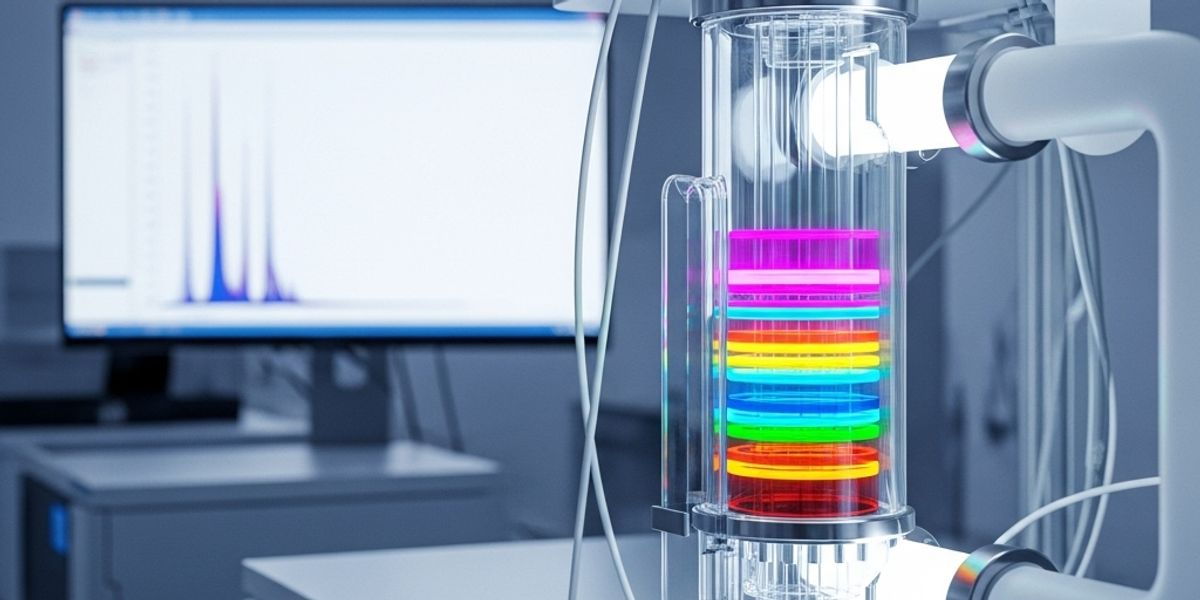
What Ion Chromatography (IC) Does Best: Quick Use‑Case Guide
Ion chromatography (IC) excels at rapid, sensitive separation and quantification of ionic species in aqueous matrices https://laballiance.com.my/, making it the method of choice for monitoring anions, cations, and ionizable organic acids across water quality, pharmaceutical, environmental, and industrial process applications.
Practitioners leverage IC for targeted tasks: routine compliance testing of drinking and process waters; trace-level inorganic anion and cation profiling in manufacturing feeds; counterion and residual salt analysis in drug formulation; quality control of plating baths and boiler waters; and rapid troubleshooting of process upsets via ionic fingerprinting.
The technique’s modularity—choice of suppressors, columns, eluents, and detectors—enables tailored throughput and sensitivity. Users favor IC when specificity, speed, and reproducible quantitation are priorities, freeing laboratories to act decisively on ionic data.
Water & Environmental Monitoring by IC : Analytes, Detection, Sample Prep
Water and environmental monitoring employ ion chromatography to quantify a broad spectrum of inorganic and ionizable organic species—common targets include halides, sulfate, nitrate/nitrite, phosphate, ammonium, alkali and alkaline earth cations, and low-molecular-weight organic acids—using detection and sample-preparation strategies tailored to matrix complexity and required limits of detection.
Analysts select suppressed conductivity, non‑suppressed conductivity, or pulsed amperometric detection depending on ion type and sensitivity needs; coupling to MS is chosen for speciation or trace-level confirmation.
Sample preparation emphasizes filtration, pH adjustment, and dilution to fit dynamic range, with solid‑phase extraction used for concentrating trace organics.
Matrix-matched calibration, ion-pairing avoidance, and routine checks for interferences preserve accuracy.
Methods favor robustness and regulatory alignment while enabling flexible deployment across surface water, groundwater, and effluent monitoring.
Pharmaceutical & Biopharma QC With Ion Chromatography (IC): Assays & Limits
When tight ionic control is critical for drug safety and process consistency, biopharmaceutical and pharmaceutical quality-control laboratories employ ion chromatography to quantify inorganic ions, counterions, and low‑molecular‑weight organic acids that affect product stability, patient safety, and regulatory compliance.
IC methods are used to measure residual salts, buffer components, counterions from API synthesis, and degradation products with clear assay criteria and established limits. Validation focuses on specificity, sensitivity, linearity, accuracy, precision, and robustness to meet pharmacopeial and regulatory expectations.
Routine QC leverages autosamplers, suppressors, and conductivity or mass spectrometric detection for trace-level determinations. Results guide batch release, impurity control, and process adjustments while supporting freedom to optimize workflows within regulatory frameworks and maintain product integrity.
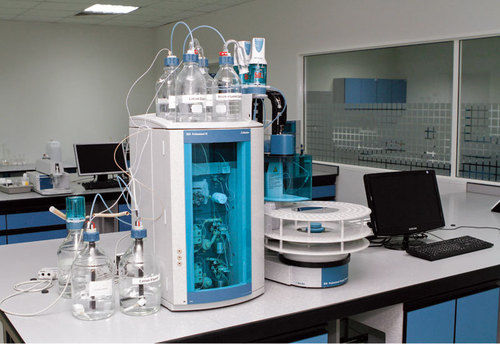
Food & Beverage Testing by IC: Nutrients, Contaminants, and Method Tips
Analytical laboratories that apply ion chromatography in pharmaceutical QC also find the technique well suited to food and beverage testing, where quantifying ions and small organic acids informs nutrition labeling, safety assessments, and process control.
Ion chromatography quantifies sodium, potassium, chloride, phosphate, nitrate, sulfate, and organic acids like citric and lactic acid—parameters essential for nutritional claims, taste profiling, and fermentation monitoring.
Trace anions and cations linked to contamination or spoilage are detected with low detection limits and robust matrices handling.
Method tips emphasize appropriate sample preparation, matrix-matched calibration, suppression selection, and column choice to separate isobaric species.
Rapid throughput, minimal solvent use, and adaptable detectors support regulatory compliance while enabling laboratories to maintain operational freedom and responsive testing strategies.
Semiconductor & Industrial Process Monitoring With IC: Contaminants and Troubleshooting
Although semiconductor fabrication demands ultra-pure streams and surfaces, ion chromatography provides the sensitivity and selectivity needed to monitor ionic contaminants that compromise device yield. The technique detects low-ppb levels of anions and cations in ultrapure water, process chemicals, and rinse effluents, enabling rapid identification of sources such as reagent impurities, leaching from components, or process upsets.
Routine IC surveillance supports control of sodium, chloride, sulfate, and ammonium that cause corrosion, leakage, or latent defects. Troubleshooting leverages methodical sampling, matrix-matched standards, and trend analysis to isolate contamination pathways and verify corrective actions.
Modular IC systems accommodate on-line monitoring and flexible routing, giving facilities freedom to integrate analytics into fault-tolerant process control and continuous improvement programs.
Conclusion
Ion chromatography (IC) serves as a versatile analytical tool across diverse laboratory settings, excelling in sensitive, selective ion analysis. In environmental monitoring it reliably quantifies anions and cations in water; in pharmaceutical and biopharmaceutical QC it supports stringent purity and impurity profiling; in food and beverage testing it determines nutrients and contaminants; and in semiconductor and industrial process control it enables trace contaminant surveillance and troubleshooting. IC’s robustness and adaptability make it indispensable for routine and regulatory analyses.